• Bizi Takip Edin
  • Follow Us
Türkiye’nin dünyada en iyi tanınan yönetim danışmanlık şirketiYaşam kalitesi, yönetim kalitesi ile artar Globally recognized Turkish management consulting firmImproving quality of management improves quality of life

Good Governance for Quality of Life Interview

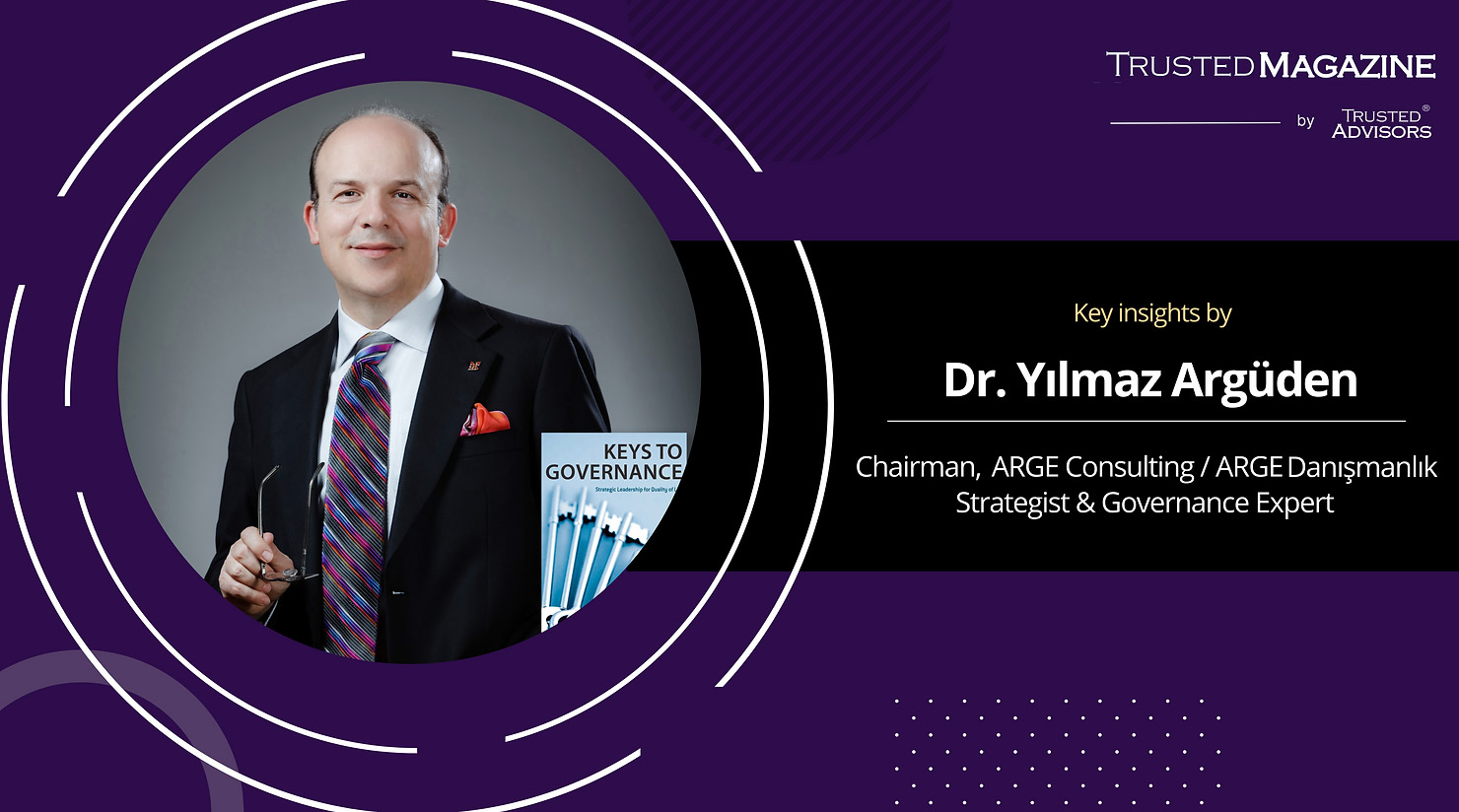
Exclusive Trusted Magazine Q&A with Dr. Yılmaz Argüden – Strategist & Governance Expert, Chairman, ARGE Consulting / ARGE Danışmanlık

Your “Keys to Governance” book was acclaimed by notable leaders including, a Nobel Peace Prize laureate, a Head of State, CEOs of major think-tanks, global companies, and institutions, as well as Deans of INSEAD and Harvard Business School. John H. Mc Arthur, Dean Emeritus of HBS, said that it is “A tour de force of a kind that comes along only rarely by a well-known and widely respected modern day renaissance leader and thinker.” What are the keys to good governance, and how can organizations embed good governance into their culture and operations?

“Good governance protects the humanity from the human beings.”

There are two basic reasons why people establish institutions: (i) more effective utilization of resources and (ii) better risk management to create sustainable value. Yet if the institutions are not trusted by their stakeholders, they cannot achieve these goals. Good governance improves quality of management and trust of stakeholders.

There are two important roles for governance: providing direction and oversight. Providing oversight is critical as per Lord Acton’s famous quote “Power corrupts, and absolute power corrupts absolutely.” When we delegate the power to make decisions for the institutions to individuals, either through elections or appointments, institutions become prone to potential deficiencies of those people, such as short-termism, ignoring externalities, over-confidence, selfishness, and even agency problems.

Good governance helps ensure separation of powers of providing direction and oversight from those of management decisions. As such it is an insurance policy for sustainability of good management as well as better strategic decision-making and management of risks.

Value creation is a function of strategic choices as well as effective utilization of different resources including financial, intellectual, manufactured, natural, human, and social and relationship capitals. Creating an effective value proposition requires successful strategic direction, efficient and effective utilization of resources, and ability to invest and innovate continuously. Independent review of strategic options developed by the management through a separate governance body improves the probability of success.

Good governance is about creating a climate where a culture for building value and trust is nourished. Good governance must ensure that the organization has the right people, processes, information, and values to create value and build trust.

In a nutshell, good governance is about sustainability of success by helping broaden our perspectives and ensuring checks and balances into our institutional decision-making processes.

Your 2015 speech at the UN General Assembly Hall referred to “Trust” as the core value that all institutions should embrace. WEF’s Davos theme in 2024 was “Rebuilding Trust” and a couple of years ago the OECD initiated a “Building Trust and Reinforcing Democracy Initiative”. Why is trust so important and how can we build trust?

“Trust is the essence of good governance and foundation of sustainable development.”

The essential principle driving modern human rights and democracy is this: people should have a say in shaping their own future and be able to contribute to the local, national, or global decision-making processes that influence their lives.

“Good governance” signifies a transformation from a type of relationship where a limited group of people have the ultimate authority to rule others to a set of relationships where mutual, inclusive engagement takes place to make desirable choices for all stakeholders. It involves the mechanisms, processes, and institutions that individuals, corporations, groups, and societies utilize in decision-making and implementation, in expressing their interest and in fulfilling their obligations, as well as in solving conflicts. In this context, governance points out to the nature of mutual interaction among social actors as well as between social actors and public administration, and it contains the meaning of assuming responsibility to help others realize their potential for improving the quality of life.

Good governance is much more than just the structure, processes, and rules of decision making and controls. Good governance is a culture and a climate of Consistency (predictability), Responsibility, Accountability, Fairness, Transparency, and Effectiveness that is Deployed (inclusiveness and subsidiarity) throughout the organization and society (the “CRAFTED” principles of governance.) Embracing them reinforces social trust for all kinds of institutions, public, private, non-profit, local, national, or global.

For truly effective results, management decisions should be data-informed and consistent with the purpose of the institution to ensure coherence and alignment with the rules and regulations and stakeholder expectations. Care should be taken to be inclusive and fair in participation, in decision making, and in implementation. Any institution adopting good governance principles has to act responsibly not only in identifying the priorities and mobilizing the resources, but also in protecting the physical, economic, environmental, and social interests of the stakeholders and future generations.

Only an institution which displays accountability throughout all phases of value creation can build a relationship of trust with its stakeholders. This can only be attained if information related to each step is shared in a data-based and transparent manner with the stakeholders. Engaging the stakeholders in an inclusive manner also helps effective implementation of the decisions and minimizes the enforcement and compliance costs.

Inclusive and meaningful stakeholder engagement in decision-making processes ensures greater representation and participation, aligns the incentives for the common purpose, produce fair and effective decisions, which in turn reinforces the trust between the institution and its stakeholders.

Thus, the essence of good governance is ensuring trustworthy relations between the institution and its stakeholders. If we are going to build trust and reinforce democracy, good governance is the recipe.

2024 is the 10th anniversary of Argüden Governance Academy that conducts impact research, unique education programs, advocacy programs to promote good governance, as well as pioneering Integrated Reporting among the NGOs and the public sector. The Academy promotes meaningful, inclusive stakeholder engagement as a critical aspect of good governance. How should organizations approach stakeholder engagement to ensure inclusivity and transparency?

“Stakeholder engagement is not just an action, but a process…”

In the current global context, preserving and promoting the democratic system is of utmost importance to improve the quality of life. Building trust for government institutions is the key to reinforcing democracy. Trust for democracy could only be built by adopting good governance with a (i) whole of society, (ii) whole of government, and (iii) whole the policy cycle approach that focuses on (a) informed, inclusive stakeholder engagement, (b) evidence-based decision making supported by ex-ante and ex-post impact analysis, and (c) integrated thinking to help consider material impacts to different stakeholders and to support continuous learning.

Sustainability of success can only be achieved by adopting a long-term perspective, considering the interests of all stakeholders in decision-making, and developing a continuous ability to invest and innovate. Sustainable success can be achieved through integrated thinking, effective implementation, and proper communication of value.

Therefore, stakeholder engagement needs to be inclusive and meaningful, and should be conducted not only at decision stages, but also at service design stages (design thinking), and in providing feedback. Hence, quality of participation, quality of information shared with the stakeholders, as well as the quality of engagement processes are critically important.

Argüden Governance Academy conducts impact research such as Sustainability Governance Scorecard©, Municipality Governance Scorecard©, and develops Local Development Guides to improve peer learning, globally. Our Scorecard methodology aims to measure the quality of participation, information shared, and processes, as well as aiming to identify and promote good examples to speed up peer learning, based on publicly available information.

The Academy also conducts good governance advocacy programs such as leading the process of awarding the European Label of Governance Excellence (ELoGE) and School on Participatory Democracy, in collaboration with international organizations such as the Council of Europe.

The Academy not only promotes adoption of Integrated Reporting in the public sector and NGOs, alongside the private sector, but also ‘walks the talk’ and has been the first Turkish institution to adopt Integrated Reporting and a global pioneer among the NGOs by reporting its activities as an Integrated Report since its founding.

You have assumed numerous international leadership roles such as being elected as the Chairman of UN Global Compact National Networks and the Chairman of the Governance Committee of Business at OECD. What are the new emerging governance challenges and how can organizations prepare for them?

“Good governance is building a culture of trust and protecting the climate in which such a culture nourishes; regarding the other, as you regard yourself.”

While change and challenge are continuous phenomena and one would need to write a book on this subject to address it properly, I would like to list four important areas: (i) Artificial intelligence, (ii) Misinformation and disinformation, (iii) Changing our perspectives on sustainability from an adjunct activity and to incorporate it into our strategic and daily decisions, and (iv) Understanding the importance of transformational governance for sustainable development.

Artificial intelligence is a transformative force that has significant impacts on all aspects of life from the economy to politics, to culture, and social life. Patterns of life, work, and sharing relationships are undergoing radical changes, those who are unable to catch up with this revolution are left outside the system at an increased pace. This development presents the danger of an alienated two-tier society in contrast to the exciting prospect of efficient governance patterns based on the principles of democracy and equity.

Unless we can provide an equitable distribution of knowledge and means of communication among the people, we cannot lead humanity to a world free of discrimination, prejudice, and animosity. This requires not only a reform in what and how we teach our children, but also a rethinking of the global priorities to make education of the masses the top priority.

The spread of mis- and dis-information poses a fundamental threat to the free and fact-based exchange of information that underpins our democracies. Active transparency and accountability, provision of trusted information, and, once again, education are keys to addressing this issue.

A sustainable global economy combines long-term profitability with ethical behavior, social justice, and environmental care. When we look at the state of the world today – climate change, deteriorating water resources, plastic waste, income inequality, gender inequality, and corruption – it is evident that institutions need to assume responsibility for sustainable development and act.

For corporations to truly contribute to a sustainable future, we need to widen the lens through which we view sustainability. Sustainability requires decision-making processes incorporating all potential impacts of a company, incorporating the positive and negative externalities into its decision-making processes, and avoiding short-sightedness and selfishness. Referring to sustainability issues G(EES), prioritizing the Governance of sustainability (Economic, Environmental, and Social) impacts, is a more appropriate acronym than ESG.

Sustainable success requires adoption of transformational governance. Such an understanding of governance requires broadening our perspectives for decision making in four dimensions: time-frame (from short term to long term), place (from where we operate to all the places that our activities make a material impact), capitals (not only financial but also intellectual, manufactured, natural, human, and social and relationship capitals), and considering all material impacts not only to ourselves but also to our stakeholders (direct and indirect), as well as assuming responsibility to build such a culture of trust and protect the climate for its nourishment.

Trusted Magazine, April 24, 2024


ARGE Consulting 30th Anniversary – HBR

HBR organized a webinar for the 30th Anniversary of ARGE Consulting with the participation of EFQM CEO and Value Reporting Foundation Director.

Dr. Argüden addressed the UN General Assembly

Click here to read the speech.

Global Compact Türkiye Chairman Dr. Yılmaz Argüden has addressed the importance of trust in maintaining good governance and sustainable development in his speech at the United Nations headquarters on June 25.

“U.N. Global Compact has been the most prominent actor in determining the corporate sustainability agenda. Today, nearly 100 [U.N.] Local Networks are designing and executing innovative and inclusive approaches. However, we have long road ahead of us for overcoming the global challenges. Trust is the foundation of good governance and sustainable development. All institutions should take responsibility in employing good governance practices and forming partnerships towards a more sustainable and inclusive future,” he said in a conference, which was organized to honor the U.N. Global Compact’s 15th anniversary.

He noted that these local networks, termed Global Compact Local Networks, are key for the future of the sustainability movement.

During the U.N. General Assembly session, global leaders such as U.N. Secretary-General Ban Ki-moon, U.N. General Assembly President Sam K. Kutesa, Nestle CEO Paul Bulcke, Unilever CEO Paul Polman, and Sinopec CEO Fu Chengyu also delivered speeches inviting business and civil society leaders to collaborate with the U.N. for overcoming universal challenges.

The sustainable development vision shared during the Global Compact +15 Conference included the U.N. global agenda for sustainable development, to be released later this year as the U.N.’s Sustainable Development Goals (SDG). The conference brought together over 1,000 representatives from Global Compact Local Networks, business, investors, academy, civil society, labor organizations and U.N. private sector organizations.

Global Compact is defined as a call to companies to align strategies and operations with universal principles on human rights, labor, environment and anti-corruption, while taking actions that advance societal goals. Global Compact’s vision of “sustainable and inclusive global economy” is the world’s largest voluntary corporate responsibility initiative.

Global Compact Türkiye, with its 304 signatories, is its 5th largest network in Europe and 11th largest in the world.

Hürriyet Daily News, 26.06.2015

Utilizing the power of financial sector for a better world

7 Leading banks that are signatories of UN Global Compact have signed the Declaration on Sustainable Finance. The declaration was initiated under the leadership of the Global Compact Türkiye during the chairmanship of Dr. Argüden who also served on the Board of UN Global Compact representing over 100 countries. It aims to integrate the evaluation of both environmental and social risks with the credit evaluation processes of the signatory banks.

Leading financial institutions across the world have begun to implement the sustainability criteria into all of their corporate activities and customer services, and thus creating long term value for the benefit of the business community and the society. On the other hand, initiatives based on voluntary cooperation such as Banking Environment Initiative, Equator Principles, and Principles for Responsible Investment are shaping the global agenda of sustainable development.

In accordance with the strategy of “creating a multiplier effect by leveraging natural stakeholders”, Global Compact Türkiye believes that the integration of the sustainability criteria into the credit evaluation processes of the financial institutions can play a crucial role in spreading the concept of sustainability across the society. The “Declaration on Sustainable Finance” prepared with this spirit is an important step forward that will improve current practices of the financial sector in Türkiye and mobilize all stakeholders in order to build a sustainable future.

With this declaration signed by Akbank, Garanti Bankası, ING Bank, İş Bankası, Şekerbank, Yapı Kredi and TSKB, we invite all the banks to participate in this transformation.

surdurulebilir-finans

This ground-breaking declaration was launched at the V. Forum on Sustainable Finance, on September 29, 2017. Jointly organized by SKD Türkiye, UNEP Finance Initiative (UNEP FI) and Global Compact Türkiye, the Forum was graced with the presence of the Deputy Prime Minister Mr. Mehmet Şimşek who has made a call to all other banks to join this initiative. This year, the central theme of the Forum on Sustainable Finance was “The Fight Against Climate Change and the Financial Sector”.

Please find the text of the Declaration at the following link: Global Compact Türkiye Sustainable Finance CEO Letter

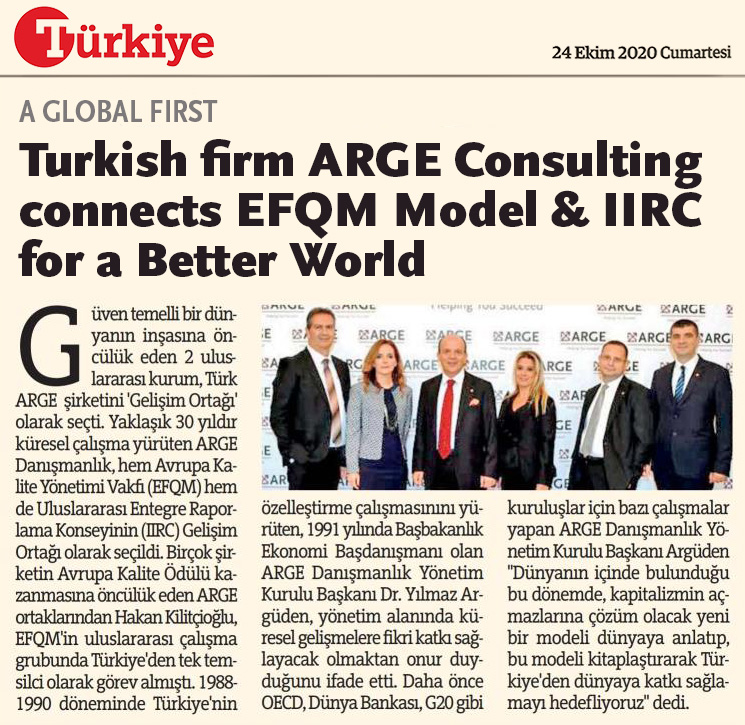
Globally recognized Turkish management consulting firm ARGE Consulting celebrates 25th anniversary

ARGE Consulting, globally renown for its governance expertise and for “management quality” in Türkiye, has completed over 1000 projects with more than 400 clients. ARGE has an exemplary corporate social responsibility program that has been recognized at the European Parliament.

ARGE Consulting, celebrated its 25th anniversary with respected names from the Turkish and global business world on 26 September 2016 at the Boğaziçi University Albert Long Hall. Chairman of Global Compact Foundation, Sir Mark Moody-Stuart; Chairman of International Integrated Reporting Council, Prof. Mervyn E. King; former CEO of Koç Holding, Can Kıraç; Tüsiad High Advisory Council Chairman, Tuncay Özilhan; and Chairman of International Association of Freighters, Çetin Nuhoğlu were among the contributors at the 25th year celebration.

Improving quality of life

At the opening speech, ARGE Consulting’s Founding Chairman Dr. Yılmaz Argüden said, “Quality of life can only be improved by quality of management. Therefore, strategy: doing the right things, quality: doing things right, building sustainable institutions, and good governance for developing the essential climate and culture of trust are the keys to success.

KonusmacilarÇetin Nuhoğlu, Tuncay Özilhan, Mervyn E. King, Dr. Argüden, Can Kıraç and Sir Mark Moody Stuart

Can Kıraç, Tuncay Özilhan and Çetin Nuhoğlu, who took the stage at the 25th anniversary celebrations has thanked Dr. Yılmaz Argüden for his leadership and vision, as well as adding a value to their companies and the society through transformational work of ARGE Consulting.

A panel discussion was held with the participation of Sir Mark Moody Stuart and Mervyn E. King. At the session, which was moderated by Dr. Yılmaz Argüden, the concept of ‘responsible leadership’ and good governance was discussed. Leaders were called on to think for the answers to the following question: ‘How could we add value to the world?’. At the closing, Dr. Argüden stressed that good governance is a key requirement to improve the quality of life within the country and promoted use of ‘Republic of Türkiye’ in all international communications for better perception management.

PanelistlerMervyn E. King, Sir Mark Moody Stuart ve Dr. Argüden

About ARGE Consulting:

ARGE Consulting is a leading Turkish management consulting firm based in Istanbul. ARGE had initiated the National Quality Movement, served as the B20 Knowledge Partner for governance and sustainability, was the first Turkish signatory of the UN Global Compact, and made critical contributions to the development of local networks with the innovative strategies it had developed. ARGE had also served as a member of the World Economic Professional Services working group, at the BIAC Governance Committee to the OECD, and at the Private Sector Advisory Group of the IFC’s Corporate Governance Group.

ARGE OrtaklarHakan Kilitçioğlu, Pınar Ilgaz, Dr. Argüden, Aylin Tuncer, Dr. Erkin Erimez ve Burak Erşahin

‘Inclusive Growth’ Türkiye’s landmark in G20 presidency

‘Making sure that the benefits of policies go to all parts of society’ is an important message that is highlighted by the B-20, the platform that represents the business communities of the world’s biggest economies, according to Dr. Yılmaz Argüden, the chairman of Türkiye’s ARGE Consulting

The emphasis on inclusive growth will be the benchmark of Turkey’s G-20 presidency, according to a prominent representative of the business world.

“Making sure that the benefits of the policies go to all parts of society” is an important message that has been highlighted as well by the B-20, the platform that represents the business communities of the world’s biggest economies, according to Dr. Argüden.

The decision to set up the World SMEs forum in Istanbul will be an important milestone for this year’s B-20, added Argüden, the chairman of ARGE Consulting, which provided policy advice on governance and sustainably matters ahead of the G-20 summit in its capacity as the knowledge partner of the B-20.

Can you tell us some of the concrete achievements of this year’s B-20 summit?

Governments are constrained by their borders, whereas businesses are acting beyond borders. They have at times a better understanding of the global environment. It is much better to involve those who have a broader understanding and interest for governments who come together to make decisions about the global economy.

In this year’s B-20, one of the focuses was on small and medium-sized enterprises (SMEs). SMEs constitute by far the majority of the business world. The majority of employment is coming from SMEs. If we solve their problems, economic development will be better; solving large companies’ problems is not enough.

Yet because they are small individually, their voices are not heard as much as bigger global corporations. This year for the first time it was decided to establish a World SME Forum (to be set in Istanbul). This decision was an important milestone for this year’s B-20. Having established an SME forum is a positive step for having some collective resources and a mechanism to represent the interest of SMEs in further G-20 discussion. The forum will raise the issues related to SMEs in a more regular format. That is one of the contributions of the Turkish presidency (of the G-20).

What would be another landmark of Turkey’s presidency as far as the B-20 is concerned?

The Turkish presidency has highlighted three issues for the B-20: Inclusiveness, implementation and investment. These “three I’s” are important. But I think the Turkish presidency’s focus on inclusiveness would be something we will all remember. What does inclusiveness mean? Making sure policy benefits go to all parts of society, without looking to gender, geography, race or class. Only through inclusiveness can we have a balanced world and handle political tensions as well.

This requires much better governance mechanisms in policy making. We need to look at the impact analysis of policies on different segments of the population. If I have to make a decision as to how to conduct a business regulation, (I would ask) what is its impact on SMEs? What is its impact on minorities, on women, on youth? It takes a lot more effort to devise a better policy when you look at all these issues.

As the U.N. Global Compact network, we conducted surveys last year about the prioritization of sustainable development for Turkey. Some of the priorities we were able to identify were not only valid for Turkey but also for the world.

One of them is women participation in labor. Another one is youth unemployment. The third is good governance, which means public engagement, evidence-based policy making and social impact analysis etc.

At the government level, the focus should be on different pockets of society. Policies recommended (by the B-20) looked at these types of aspects.

In addition, as the knowledge partner of the B-20 we gathered the business world’s perspective on governance and sustainability matters. We made recommendations about transparency both of the government as well as the corporate sector with regards to reporting their performance not only on financial matters but also with regards to environmental matters and the impact of their policies on human rights, labor and anti-corruption.

Public engagement is also important. Governments need to cooperate with both the business world and civil society; the business world needs to cooperate with civil society, which in turn should also understand the needs of the governments and the business world and should engage and cooperate. We have (engagement groups) like the B-20, C-20, Y-20, so we are at the very early stages of this (multilateral) cooperation. Obviously the mechanisms of involvement and the quality of engagement need significant improvement.

All of this is easier said than done. To what degree do you think all these policy advices will be listened to and resonate with G-20 leaders?

Both intellectual development and implementation are painful processes and it takes a long time. No one should expect things will change because there was a G-20 meeting and because the B-20 made a lot of recommendations. But I am confident that every meeting, every survey and recommendation, makes a mark on people’s thinking.

There is so much terrorism, so much suffering in the world. Economic wealth is not being distributed properly. Certain things need to change. How will this change come about? The idea of inclusiveness, the idea that we need to measure the impact of our decision on different constituencies and not only on current stakeholders but even on future stakeholders, is gaining momentum and these meetings are important for these ideas to further develop and further disseminate. Decision makers are so overwhelmed with current affairs, “There is a bomb here, there is a war there; I have to deal with the yuan devaluation….” Thinking about the long-term perspective generally happens not very often except at these types of meetings. Leaders can forget about it the next day, but still there is always a remnant.

The G-20 is taking place at a time when tremendous political, social and economic turmoil is taking place in Turkey. Does the current situation have an impact on the meetings?

When you have a stable and peaceful environment it is more fun to discuss these long-term issues and there is much more appetite to come to the country. Obviously this kind of environment has some impact on who comes to the meetings, on how much emphasis is given to the ideas that come out vs the current affairs. It would be naïve to say that they don’t have an impact, they do have an impact and that impact is not positive. Nevertheless, the Turkish presidency of the G-20 is important and it has identified appropriate areas to focus on and some movements have been accomplished in those areas. If the environment was more peaceful, I am sure it would have been more effective.

For instance, if we did not have terrorism, rather than the terrorist news in the New York Times, this would have been in the New York Times.

But there seems to be a discrepancy between what is being discussed and what is being done. Turkey prioritizes inclusiveness, yet the government is criticized for its authoritarian ambitions.

Turkey needs a lot in that area as well. What the world needs right now as far as inclusiveness is concerned is the mentality that flourished in Anatolia in the 12th and 13th centuries. Unfortunately, we are not going towards being an all-inclusive society. Right now, there are definitely deficiencies between actions and words.


Who is Dr. Yılmaz Argüden?

yilmaz-arguden

Dr. Argüden is the founder and chairman of ARGE Consulting, a management consulting firm known for value-creating strategies and institution building. He is also the chairman of the Rothschild investment bank in Turkey. His career spans the private sector, public sector, multinational institutions, NGOs and academia.

He worked at the RAND Corporation as a policy analyst (1980-85) and at the World Bank as a senior officer (1985-88). Upon his government’s invitation, he returned to Turkey where he led the Privatization Program (1988-90). He also served as the chief economic advisor to the prime minister (1991).

Dr. Argüden has served on the boards of more than 50 national and international corporations and was the chairman of the largest Turkish steel company, Erdemir (1997-99). He is an adjunct professor of business strategy, an author of numerous books and a columnist focusing on business and strategy issues. As the chair of the Local Networks Advisory Group, he represents the National Networks on the board of U.N. Global Compact, the world’s largest sustainability platform.

Barçın Yinanç
Hürriyet Daily News, 14.09.2014

OECD – Building Trust : BIAC Governance Committee Vice Chair, Dr. Argüden’s remarks

OECD Forum
Trust in Business
Dr. Yılmaz Argüden, Vice Chair of BIAC Governance Committee
Wednesday 3 June, 9.00-10.30

  • I commend the OECD for addressing the issue of trust in a comprehensive manner.
  • Trust is the essence of good governance and foundation of development. Any deficiency of trust, whether in the private or public sector increases risk premium, transactions costs, enforcement and compliance costs, and thereby hindering economic development. At the same time, good governance is a culture and a climate in which such a culture flourishes. Therefore, it has to be addressed at all levels, public, private, and NGOs.
  • Restoring trust is key in all instances where there is an agency problem which may take different forms: fraud, cronyism, lethargy, risk aversion, excessive risk taking. It also requires making balanced judgements on evaluation of the risk-reward balance, short term – long term impacts, and prevention of preferential treatment of any stakeholder.
  • The areas we need to consider should not be limited to anti-corruption, but also include human rights, labour rights, environmental and social impacts, such as those addressed by the UN Global Compact.
  • At the 2014 OECD Ministerial Council Meeting, Ministers underlined the importance of rebuilding trust in governments as well as in private actors. On this basis, the OECD developed the “Trust Strategy”, which is meant to help rebuild public trust towards markets, public institutions and governments.
  • My BIAC colleague Corinne Lagache is addressing in more detail the second pillar of the Trust strategy: Trust in Business.
  • But I would like to also remind that BIAC also strongly supports the project on trust in public institutions.
  • As you know, the Trust in Public Institutions project aims to define a conceptual and statistical framework to measure trust in public institutions:
    • Efficient governance and effective enforcement of legal frameworks are important for trust among business and for the economy as a whole.
    • To operate and be successful, business depends upon stable, transparent, predictable and efficient legal frameworks. These elements are the basis for a level playing field and for a competitive, confidence-inducing business environment.
    • The fair and consistent implementation of rules is another key element for trust in business.
  • However, in 2014, BIAC launched an economic survey which revealed that only 4% of the OECD’s 2013 “Going for Growth” country-specific recommendations were fully implemented a year later, and 35% not implemented at all.
  • It is absolutely necessary to improve the effectiveness of regulatory consultation processes.
  • This is why we strongly support the OECD initiative on Measuring Regulatory Performance and its focus on three major indicators for efficient: regulatory processes: Regulatory Impact Assessment, Stakeholder Engagement, and Ex-Post Evaluation.
  • Essential internal procedural safeguards should also include transparency of the process and non-discriminatory implementation, disregarding the nationality of the parties involved, as well as fairness of enforcement actions.
  • Rule of law is an indispensable prerequisite for fostering investment and predictability for business.
  • Building and restoring trust depend on three things:
    • Clearly expressed values and principles that are in line with the priorities of the community.
    • Embedding those values and principles effectively in the day to day decisions and actions of the public sector.
    • Reporting publicly and transparently on progress and performance so that all stakeholders can form judgements, with particular emphasis on materiality as considered in the Integrated Reporting framework.
  • What we would expect from governments now is an Open Declaration of Intent for actions that aim to build trust and transparent sharing of the performance and results on a regular basis, on a similar model as the UN Global Compact requirement of annual communication on progress.
  • In sum, I would say that for markets to be able to grow and produce wealth, trust is an indispensable precondition. Without trust, governments will face difficulties to implement and secure acceptance of policies needed to address today’s challenges. Efforts to promote trust in business and trust in governments should go hand in hand.

ARGE Consulting chaired B20’s Governance & Sustainability meeting at the OECD HQ

B20 has brought together critical stakeholders in Paris to prepare ‘Governance & Sustainability’ recommendations to G20 Leaders to be presented at the November 2015 G20 Summit in Antalya. Dr. Yılmaz Argüden, Chairman of ARGE Consulting (B20 Knowledge Partner) moderated the session. Speakers included global figures such as John Danilovich, International Chambers of Commerce (ICC) General Secretary; Sir Mark Moody-Stuart ,Chairman of UN Global Compact Foundation; Nikholai Malshev, OECD’s Head of Regulatory Division; Paul Druckman, Integrated Reporting CEO; and Stefan Embled, the World Bank Group’s Special Representative to the OECD and Director Europe.

Paris, June 1st, 2015 – G-20 Leaders’ Summit will be held in November 15 -16, 2015 in Antalya Turkey. B20 will prepare recommendations that would be helpful to find solutions for global business issues. This year B20 Turkey Secretariat decided to form a new Theme “Governance and Sustainability” since 2015 marks a milestone year in which UN will establish Sustainable Development Goals (SGDs) and the Climate Summit to be held in Paris will be another milestone event related to global sustainability. ARGE Consulting has been selected as the Knowledge Partner of the Governance and Sustainability Theme.

ARGE Consulting is the only Turkish consulting firm to become a B20 Knowledge Partner. ARGE has a global reputation on governance related subjects.

Workshop has been organized in OECD Headquarter Paris in June 1, 2015. Workshop has been started with panel discussion moderated by Dr. Yılmaz Argüden, ARGE’s Chairman. Speakers in the panel are; Sir Mark Moody- Stuart UNGC Foundation President, John Danilovich ICC General Secretary, Nikholai Malshev OECD, Head Regulatory Division, Paul Druckman Integrated Reporting CEO and Stefan Embled World Bank Group Special Representative and Director Europe.

The role of principled business practices in building trust and achieving inclusive and sustainable development were the focus of discussions. Multi-lateral institutions participating in the discussion emphasized the importance of disclosure and transparency on reporting business performance in the areas of environmental, social, and governance spheres.

The participants who were key business representatives from the G20 countries that participate in B20 Task Forces had opportunity to state their views after panel discussion. ARGE has been represented by Dr. Yılmaz Argüden, Ms. Pınar Ilgaz, and Dr. Erkin Erimez.

B20 is Emphasizing “Governance and Sustainability”Paul Druckman (CEO, Integrated Reporting), John Danilovich (Secretary General, ICC), Dr. Yılmaz Argüden (ARGE Consulting, B20 Knowledge Partner), Stefan Emblad (World Bank, European Director), Nikolai Malyshev (OECD, Head Regulatory Policy)

The Handbook of Board Governance: Responsible Boards for a Sustainable Future

Dr. Yılmaz Argüden, of ARGE Consulting in Türkiye, lends this chapter a truly international perspective. Of course, that is appropriate, since any single company or country alone cannot solve climate change and other problems. Yet, the implications for businesses are profound. “Future investment will need to be compatible with a zero-carbon world.”

Argüden provides a great overview of sustainability initiatives, which are mostly global in origin. However, he also includes an impassioned plea:

“The real issue is the global governance structures, the way the incentive systems are organized, and lack o credible leadership on global issues that has the authority and ability to impost remedies…

Therefore the first agenda item for all these meetings should be how to consensually delegate sovereignty to global institutions and how to make these global institutions have real legitimacy and jurisdiction over key global issues…

The second agenda items should be to change the way we teach to prepare the next generations for a more collaborative world… ensure people fully understand their mutual dependence… People should have a say in shaping their own future and be able to contribute in the global decision-making processes that influence their lives.

The third agenda item should be how to reshape our incentives systems, in particular taxations schemes.”

Dr. Argüden goes on to describe measures that corporate boards can initiate and to describe examples from Philips, Unilever, Microsoft, Google, Apple, ING, Puma and others. He concludes with a useful self-assessment tool for board members. There are plenty of tools in this chapter alone to help refocus your company on its long-term survivability, as well as that of a sustained salubrious environment for the planet.

— James McRitchie’s review at CorpGov.net

Click Here to Order

ARGE Consulting is B20’s Knowledge Partner for Governance & Sustainability

With the development of the UN’s Sustainable Development Goals (SGDs) and the Paris Climate Summit on the way, 2015 is poised to be a milestone year for global sustainability. With this in mind, the B20 is working to advance solutions related to global sustainability and governance through the continuation of recommendations set out by last year’s Australian summit.

B20 Turkey’s work stream for “Governance and Sustainability,” will address current and emerging global issues and influence policymakers to implement measures that will enhance the business community’s contribution. The work stream will focus on:

  • Importance of responsible business conduct to achieve B20 and G20 targets
  • Importance of responsible governance and business conduct as requirements for financing and membership in value chains
  • The role of SMEs in this transition

Good governance and sustainability efforts are paramount for increasing employment, creating inclusive businesses and societies, protecting the environment, and fighting corruption. In 2015, B20 Turkey will work to advance these goals

Knowledge Partner: ARGE Consulting — ARGE was founded in 1991 to provide advisory services in the areas of business strategy development and implementation, evaluation and development of investment projects, development of technical and organizational infrastructure, and change management.

B20 Governance and Sustainability – Concept Paper
Click here to download as PDF

Huge donation for an idea: First time in Turkey

In Turkey, donations are generally given to schools or hospital buildings. It is customary to write the names of the donors at the top of the buildings.

However, this general trend was not obeyed recently in Turkey, when $1.5 million was donated to develop and spread the concept of “governance” in Turkey.

The founder of the Argüden Governance Academy, Dr. Yılmaz Argüden, said this was an important milestone in the “history of donors” because this donation was not given, as we are used to, to a physical venue, but rather to the development of intellectual capital.

One of the founders of the Turkish Society for Quality (KalDer), Argüden is the person who initiated the “National Quality Movement” in Turkey. With this movement spreading to thousands of companies and institutions and proving to be extremely successful, Turkey is one of the two countries that have received the most awards in Europe.

After quality, Argüden is focusing on “governance.” He has written a book in English on this subject titled “Keys to Governance – Strategic Leadership for Quality” (Palgrave Macmillan).

This concept is a bit abstract for many of us, but Argüdensaid in short it was a mechanism that determines how administrations should be provided guidance and oversight.

He set up the “Argüden Governance Academy” in the beginning of the year. In a recent conversation he said, “Trust is the foundation of development. Especially trust in institutions. Why is London a financial center and Amsterdam a commerce center? Because there is trust for institutions there. Those trusted societies and institutions attract financial or intellectual resources; they trigger development.”

To build confidence, according to Argüden, each institution should adopt the principles of good governance, such as consistency, responsibility,accountability, fairness, transparency, and participation.

Argüden Governance Academy, even before its first anniversary, was able to startcooperating with significant international institutions, such as the IFC, OECD, University of Toronto the Rotman School.

It is a non-profit organization that is translating OECD good governance principles from English to Turkish.

There are leading figures in governance, such as Professor Mervyn King and Professor David Beatty on its advisory board. The first donation was made by ARGE Danışmanlık to a fund set up by the Academy under the umbrella of the Boğaziçi University Foundation. It was a small donation in its way, said Argüden, but the huge $1.5 million donation came from TIRSAN, Europe’s fourth-largest trailer producer.

Çetin Nuhoğlu, chairman of TIRSAN, was the chair ofKalDer after Argüden. He is also the chair of the International Transporters Association (UND).

TIRSAN has a capacity to produce nearly 16,000 trailers yearly and exports to 51 countries. Nuhoğlu trusts the Academy, as well as believing in the significance of governance.

It is for the benefit of all of us that these kinds of generous donations increase from the business world to the fund Argüden Governance Academy has founded.

Gila Benmayor,
Hürriyet Daily News, 23.12.2014

ARGE Consulting is accredited as a Turquality Consulting Firm

TURQUALITY is the only government supported brand program in the world. The program encourages companies to create powerful brands and to develop capacity in order to increase their competitive advantage. Turquality program aims to develop global Turkish brands. Turquality program acts an as intermediary for the companies to access; financial support to brand potentials and  strategic, organizational and technological consulting services for development. In this perspective, the program guide the companies included in the program with accredited consulting companies.

The companies included in the “Turquality Support Program” will be supported by the “Undersecretariat of Foreign Trade” up to %50 of the compensation for the services they have taken from the accredited consulting firms.

ARGE Consulting is accredited as a Turquality Consulting Firm and support companies with “Management Consulting” services.

Turkey’s Governance Academy attracts private donation in challenging times

A non-profit initiative founded by ARGE Consulting to improve the quality of governance in Turkey has attracted a significant donation from the private sector, as the country faces several challenges on the issue.

Çetin Nuhoğlu, the chairman of Tırsan A.Ş, which is one of Europe’s leading trailer producers, donated $1.5 million to the Argüden Governance Academy Fund established within the Bosphorus University Foundation (BÜVAK) in Istanbul on Dec. 5.

“Trust is the foundation of sustainable development. Good governance is the key to devising effective policies and processes in a participatory manner to achieve desired performance levels in a sustainable fashion,” Nuhoğlu said during the protocol’s signing ceremony. The ceremony was also attended by Dr. GülayBarbarosoğlu, the rector of Boğaziçi University and the chairman of the Boğaziçi University Foundation, and Barış Dinçer, the executive director of the Argüden Governance Academy.

Nuhoğlu stressed that Turkey needs good governance in the public sector, private sector, and NGOs.

”Established under the leadership of Dr. Argüden, an internationally renowned governance expert, this Academy fills an important gap in strengthening the understanding and implementation of good governance. Therefore, we strongly believe that supporting this initiative will help improve the sustainability of our institutions and quality of our lives”, he said.

Turkey had entered the 21st century with a young and dynamic population and there is an opportunity that should not be wasted, Barbarosoğlu said. “Good governance is the key for a sustainable future. Therefore, training the next generation of leaders with vision and skills in governance is critically important for a sustainable future,” she added.

Financing a concept, not buildings

As Turkey faces increasing calls for a more efficient economy, public administration and better transparency, the donation is unique in three aspects. Not only does it highlight a private donor as a “valuable role model,” it also provides “strong resource for educational and research activities” for the Academy, according to Dinçer.

The most striking aspect of the donation, on the other hand, is seen in its “innovative approach” by focusing on the development of a concept, which is good governance, instead of financing physical buildings. “Developing the intellectual capital of the country is critical for improving our competitiveness and quality of our lives,” Dinçer added.

The non–profit Academy was founded in February 2014 by ARGE Consulting in order to share its knowhow in governance with society. Launched with the understanding of “Good governance for quality life”, the Academy conducts activities to increase the quality of governance in the public sector, NGOs, and private sector enterprises. It develops joint educational and research projects with academic institutions, international associations, and related NGO’s.

Hürriyet Daily News, December/05/2014

Dr. Argüden is on the UN Global Compact

Dr. Argüden has been appointed to the Board of the United Nations Global Compact, the world’s highest public-private Board, Chaired by UN Secretary-General as a result of his election as the Chair of the Local Networks Advisory Group (LNAG). The LNAG represents over 100 National Networks of Global Compact signatories.

Local Networks Advisory Group was established last year to empower Local Networks with a greater say in the initiative, thereby maximizing the positive impact of the Global Compact’s global-local reach, knowledge, expertize, and dynamics.

The Local Networks Advisory Group (LNAG) consists of 7 members representing the Americas; Africa; Eastern Europe; MENA; South, Central and North Asia; South-East Asia and the Pacific; and Western Europe.

Dr. Yılmaz Argüden, the National Representative of Global Compact Türkiye, is a strategist and governance expert who has demonstrated commitment and leadership to improve the quality of life by improving the state of the world throughout his career.  He has been serving as the Turkish National Representative of the Global Compact as well as the Representative of Eastern European Countries at the Local Networks Advisory Group.  He has been instrumental in developing best in class examples for broadening the implementation of the Global Compact principles by innovative strategies such as:  (i) Sectorial Deployment Strategy and (ii)  Leveraging Natural Allies such as the media, banking sector and brand owners with broad value chains.

14.02.2014

Equality is important for economic development

Dr. Yılmaz Argüden answered Borsa İstanbul’s questions at the Bell Ceremony for Gender Equality.

İş’te Gündem CNNTurk

An interview with Dr.ARGUDEN.

ARGE Consulting, celebrates its 15th anniversary.

İSTANBUL- Recognized for improving management quality and helping development of non-governmental organizations in Turkey, ARGE Consulting, has been the choice of more than 200 leading institutions in hundreds of projects as the management consulting firm to work with.   The Chairman of ARGE Consulting, Dr. Yılmaz Argüden who is also a columnist at Dünya said “Improving the quality of management, improves the quality of life.”

During its first fifteen years,

  •  ARGE, has helped numerous leading companies in their industries with new strategic initiatives to improve their profitability and market values.
  • Numerous ARGE clients have been recipients of National and European Quality Awards.  Turkey has become one of the leading countries in Europe in terms of the number of European Quality Award recipients she hosts.
  •  Governance of many institutions; and careers and performance of thousands of professionals are being managed by the governance and human resources systems established with ARGE’s institutional development projects.
  • Companies that work with ARGE are able to utilize competition law and EU norms for strategic advantage.
  •  ARGE, has been a leader in introducing new management concepts such as ‘balanced scorecard’, ‘intellectual capital’, ‘value management’, ‘change management’, ‘reputation management’ in Turkey.
  • A leader in Corporate Social Responsibility ARGE, is the first Turkish firm to sign the Global Compact in Turkey.
  • ARGE’s policy of encouraging its employees to donate one day a week for non-profit activities and its achievements in the community has resulted in ARGE being selected as one of the top three companies to Shape the Future with its corporate social responsibility approach by Generation Europe at The European Parliament in 2002.
  • ARGE Consulting has been the only Turkish company to be featured in the European Commission publication named, ‘Responsible Entrepreneurship’.
  • ARGE’s corporate social responsibility approach has been featured in a case study prepared by the Bosphorus University and made available to other universities by the European Case Clearing House.

ARGE stands out with its ability to implement world-class management methodologies within the local culture.  ARGE shares its experience with the public through numerous articles and books, as well as, its web site www.arge.com.

Success of the Turkish Company in Europe

These days, in which we try to get a date for European Union membership, a small Turkish company has left giant European companies behind and was rated among the top three companies “Shaping the Future” in Europe.

ARGE Consulting has become one of the top three finalist companies in terms of “Corporate Social Responsibility” through its efforts for the development of non-governmental organizations. Organized by the Generation Europe, the winner will be awarded at the European Parliament in Brussels on 2 December.

At the press conference, the Chairman of ARGE Consulting, Dr. Yılmaz Argüden stated that this success does not only belong to ARGE but also an important achievement for Turkey, and said: “High quality contributions are recognized and appreciated at the international community. Our success, being among the top three exemplary companies for Europe, is a perfect demonstration of this fact.” ARGE, with its mission for preparing companies for the future, provides strategy, business excellence, and institution building services.

Türkiye
21.11.2002

ARGE Consulting is the first Turkish company taking part in the “Global Compact”.

ARGE Consulting has become the first Turkish company to sign the “Global Compact” among hundreds of companies and non-governmental organizations all around the world.
ARGE Consulting is the first Turkish company taking part in the “Global Compact”.

22 September 2005- ARGE Consulting, a company known for its achievements in value creating strategies, management quality, institutional development, and development of non-governmental organizations in Turkey, was selected as one of the top three companies with its commitment for corporate social responsibility by the European Parliament in 2002.  ARGE Consulting has further become the only Turkish company which was recognized in the “Responsible Entrepreneurship” report, prepared by the European Commission to recognize best practices by European SMEs.  ARGE’s efforts in corporate social responsibility are also taught as a case study in many universities (The case study, which was prepared by the Bosporus University, is also taught in universities all around the world through the European Case Clearing House.)

ARGE Consulting, one of the best known management consulting companies in Turkey, encourages its employees to engage in voluntary work for NGOs one day a week as a corporate policy.

ARGE employees have made significant contributions in starting KalDer’s National Quality Movement and creating a separate award category for non-governmental organizations; developing a Management Training program for NGO’s in Bosphorus University; supporting the activities of the Private Sector Volunteers Association to promote volunteerism in the society. ARGE Consulting has also supported Turkish Economic and Social Studies Foundation’s efforts and published a book on corporate social responsibility.

ARGE Consulting, with its mission to prepare companies for the future, provides services in the areas of strategy, business excellence and institution building, and supports the development and implementation of the leading management concepts in Turkey such as Balanced Scorecard, Value Management, Reputation Management, Change Management and Intellectual Capital.

The Global Compact, which was initiated by the United Nations Secretary General Kofi Annan during the World Economic Forum in 1999, has been signed by hundreds of companies and non-governmental organizations all around the world. The Global Compact is a purely voluntary initiative with no legal implications. It is a roadmap that is formed around 10 basic principles in the areas of human rights, labor rights, environment and anti-corruption. There are many benefits to participating in the Global Compact:

– To demonstrate leadership in sustainable growth, and corporate social responsibility,
– To have a series of guiding principles in terms of risk management in critical situations,
– To create solutions for social problems by leveraging the UN’s global reach and convening power with governments, businesses, and civil society.
– To increase corporate brand value,
– To increase employee motivation and productivity,
– To engage in and adapt easily for global collaboration,
– To gain access to private funds and achieve lower funding rates.

BT İnsan

Balanced Scorecard is in Turkey

With the cooperation between ARGE and Renaissance Worlwide, a new management system, “Balanced Scored”, is now in Turkey. Balanced Scorecard, which has been widely used by successful companies over the five years, enable to implement strategies effectively.

ARGE’s New Area of Specialization

EU candidacy has affected the areas of consultancy. ARGE Danışmanlık, the leading consultancy firm providing consultancy for management strategies, included “EU and Competition Laws” among its areas of specialization.

Owners and partners of ARGE Danışmanlık different areas of specialization. Dr. Yılmaz Argüden, Murat Yalnızoğlu, Dr. Ergin Sağdıç, Dr. Metin Kanmaz are specialists in the areas of strategy, transformation management for high performance, Total Quality Management Practices, European Union and Competition Laws respectively.

After Turkey’s becoming a candidate for EU, consultancy services have got subtitles like, Competition Laws, Economic Analysis, European Union and International Laws for Commerce. Competition Laws are new for Turkey, and economic life is closely related with it. Especially in the develeoped countries, companies are careful to take strategic decisions and run their business in accordance with those laws.

Emphasizing the progress of Turkey towards EU membership ARGE specalists noted that, full membership will bring new rules and regulations to Turkey, thus it is important to forecast how this will affect the sectors and companies. This is especially significant in relation to new opportunities and risks.

Strategy Development, Balanced Scorecard, Total Quality Management, Institutionalization of Family Companies, Management Systems in Organizations and Human Resources are among the speacial areas of consultancy of ARGE Danışmanlık.

Finansal Forum
26.1.2000

Quality, By All Means, Quality

A person who knows what he wants in life is always after something that will bring him closer to his objective. This may be money, academic career or fame, depending on the person. We have always been after better education. We have always wanted education with more productivity and creativity and more of it, not only for our selves but also for Turkey.

Yılmaz Argüden, the chairman of KalDer, Turkish Quality Association, is among those people who knows what he wants in life. He has chosen the word “quality” to describe his mission in life just like we have chosen the word “education” to describe ours.

He has become identified with the word “quality”. His main job is “quality”. Whatever position he takes, in KalDer, in Education Volunteers Foundation, in TESEV (First Independent Turkish Think Tank), in Turkish-American Business Council, or in the activities of the other volunteer organizations he is always representing “quality”. He is always insisting on for more quality. He is giving lectures in the universities. He is writing articles in the newspapers and in the magazines. He is giving conferences throughout Turkey. In KalDer he is doing what Hayrettin Karaca is doing in TEMA…

He has added the Ministry of Education among the areas of interest for KalDer. Bener Cordan, the Under-secretary of the Ministry has become a member of the management in KalDer. Even though starting as a small movement, a movement of a search for quality in education has began.

The main difference between Turkey and the west is about the quality of life. In order to catch up with the west in the sense of life quality, there must be quality in the world views about production, sharing, education, thinking, criticism.

Even though we are making the first moves regarding “quality” in these fields, it is certain that, with the efforts of Argüden and his colleagues, we will make a significant progress…

In spite of his young age Argüden is an enterpreneur in various fields. Before KalDer he was the chairman of BÜMED (Bosphorus University Alumni Organization). He had the chance to learn more about the University from the aspect of administration. He learned that it was very difficult to carry on things in a university where the financial support provided only by the State is insufficient, as the number of universities supported by foundations were increasing. He had concluded that universities like Bosphorus University needed strong economic flow from sources other than the sources of the State.

He had developed a project by looking at the applications practised throughout the world. He presented this project to administration of the University. But apparently it was forgotten on the shelf. It has never become a subject on the agenda of the university.

Yesterday he explained the project to us in detail. Since we have always put forward similar arguments regarding the same issues, on the basis of rationality, during the discussions we came to an agreement on many points…

Summary: In order to stop professors’ leaving for other universities and thus, the quality of the education going down, he wants an economic flow from new resources for the university. His project allows an increase up to approximately 5000 dollars in the salaries of professors as the size of the budget may become 3 or 4 times bigger. Naturally, at this point the question comes to mind, “From where the new resources will flow?” This question might start a hot debate, but after examining the project in detail, there isn’t any reason not to support it. Argüden proposes four different practices. First, to form a board of trustees . Secondly, to increase tuitions to colllege tuitions level and take it only from the students who can afford it, providing every kind of scholarship to the students who cannot afford it. Thirdly, to give start to academic evaluation. Fourthly, to encourage more donations.

In fact, the project has more details. But he admits he was not able to put it in practice yet.

In conclusion, even the best projects cannot find support if it doesn’t have the chance to be introduced well. Seeing the state universities become weaker and weaker next to the private universities, we know that something has to be done about it, but we still do not hesitate to refuse the projects offering solutions, even without discussing them. This is our greatest problem …

Milliyet
18.4.2000

Someone has undertaken the challenge to bring “quality” to our lives

At times national leaders are very important.  They motivate people, even when they do not get sufficient support they continue with their struggle, sometimes they fail, but generally they succeed…

Atatürk is such a leader.  And his achievements are far beyond what many other leaders have accomplished.

Despite certain justified criticisms, Turgut Özal is also such a leader.  One could perhaps come up with other examples.  However, unquestionable leaders such as Atatürk are hard to come by.

People who try to bring “quality” to Turkey may also be considered among such leaders.  Among them, one in particular, named Yılmaz Argüden has been continually striving to bring quality to all aspects of life.

When he has started this mission, some have even suggested that this was a self satisfying endeavor.  However, he has demonstrated persistence and and brought the concept of quality to the agenda in all dimensions of our lives.

Argüden and his colleagues have brought the subject of quality in public life, politics, and business world into the national agenda.  Lately, this issue is turning into a national issue.

Particularly this year, the establishment of a new category for quality awards for the SMEs will extend the reach of this concept throughout the country.

It is imperative to support the “National Quality Movement” initiatied by Argüden and his colleagues, if are to improve the quality of our future.

GÖZLEM
21.12.1998

Anxiety Over a Life Free of Inflation

ISO’s survey for the biggest 500 companies, shows that 80% of companies were getting their income from other resources than their activities. Although the bussiness world is giving support to the government fight with the high inflation rate, possible difficulties coming along with the low inflation program urge them to develope new strategies for their bussiness.

As the companies will be losing their main resources of income with the low level of inflation, they are also seeking support from the government and the banks in return.

INTERVIEW WITH MURAT YALNIZOĞLU

Murat Yalnızoğlu, President of Management Consultants’ Association, and one of the partners of ARGE Danışmanlık, answered our questions about the difficulties of bussiness life as the economic situation is changing and the solutions they are offering to their clients.

Who is coming for consultancy to you ?

Various people, like bankers, tobacco producers, executives from public or private institutions and from national or international companies, managers of family companies of Turkey are coming to us.

What kind of services are you offering?

It changes depending on the structure of company. Recently our favourite area of service is strategy. Strategy for building grounds to make a company distinguishable among its rivals, to make it leave its rivals behind and adapt it self to changing conditions with a master plan. The master plan includes answers to some essential questions like; “Which products will be offered to which customer?”, “What must be done or must not be done for the best presentation ?”

What are the demands of companies for consultancy recently?

There has been significant changes in Turkey for the last 2-3 years. The decrease in inflation is the most significant of all for companies and consumers. Turkey has been living with a very high level of inflation for 20-25 years. Companies have built up their structures upon an inflationist order. A sudden attempt to change this, results in an enormous imbalance for the companies. We’ve already started to move away from the inflation. When we examine ISO’s survey for the biggest 500 companies, we see that %80 of companies were getting their income from other resources than their activities. In the new economic situation, companies are losing their main resources of income. What will they do now? How are they overcome the stagnation ? Are they going to have crisis? Asking all these questions, the necessity for new visions is obvious.

Are there people coming to you in panic asking for immediate help?

Yes. Not in panic maybe, but they are coming in confusion. They feel the urgent need to change and improve things but they do not know where to begin. For instance if you say, “Lets begin with clarifying our expenses.” It won’t take less than 6 months. If you decide “to improve your production process” or “learn more about your customer”, those will take more than 6 months, too. Everybody knows that they do not have that much time. You cannot do all those things with priority at the same time. You have to seek a solution for this situation.

How will low inflation rate affect structures of companies?

In order to adapt to new economic situation companies need healthier structures. Where expenditure, profit rate, customer profile of the company are very clear and quality of products, sales activities are high. This is the rule for competition not only in Turkey but in every country of the world. Thus, sooner or later companies will be re-structuring themselves in this direction.

21 Shining Stars of the 21st Century

These 21 men have become the high-profiles of 21st century with their confidence in themselves. They have built up their self-confidence upon their knowledge in their occupations and upon thought, technology and a flexible approach.

With the industrial revolution and all the technological develeopments, last century was really a brilliant period. With the inventions following one another other we’ve come to the point of cloning sheep. But two world wars in the same century have shed shadows upon all the brightness. In fact we need to be careful with the 21st century, too. We have to believe that Information Revolution will help us recover the side-effects of the Industrial Revolution forcing man to become a part of the machine and lose his human character. We are in the Information Age now, and its impossible to hinder information. Thus, borders have began dissappearing. We had imagined the sky of the 21st century with flying cars when we were children. It was an unattainable dream. But then suddenly we found ourselves in the middle of it. The people of the 21st century are not super-heros flying from one star to the other, they are us ; they are among us! They all have hopes. Some of them are just starting the journey, some of them are willing to share what they have got till now with those stepping into the journey. That is the most important of all: the human creativity…

Here are a few comments about some of Turkey’s shining stars of the 21st century:

Fahir Atakoglu, Musician: He has proved to be an international professional with his awarded works. He is working on his new album which will be released in America.

Çetin Altan, Journalist: Writing for 50 years. He has 4 novels, 1 story, 1 alphabet, 8 plays, 8 essays, 1 satire, 2 travel books, 2 memoirs, 3 research books, 4 books of political essays, 4 portraits, interviews and lots of articles.

Atil Kutoglu, Fashion Designer: Making dresses for the women of European aristocracy. His creations are displayed in Düsseldorf, Milano, Paris, New York.

Ugur Polat, Actor: He has a theater background. He have performed in various Turkish movies. His performance in the Turkish movie, “Salkim Hanimin Taneleri” has been awarded with “Golden Apple” in Antalya Film Festival.

Ugur Polat, Actor: He has a theater background. He have performed in various Turkish movies. His performance in the Turkish movie, “Salkim Hanimin Taneleri” has been awarded with “Golden Apple” in Antalya Film Festival.

Serdar Erener, Advertiser: The naughty boy of the advertising world. He affects people with his awarded works which convey messages through local and global values combined together. He is a member of the brain-team in the advertising company, Young and Rubicam.

Yilmaz Argüden, Businessman: He is a representative of the young Turkish businessman generation, supporting innovation through global thinking and contemprory visions, interacting with the international circles of businessmen and intellectuals. Dr. Yilmaz Argüden is the Chairman of Board in Turkish Society for Quality (KalDer), and he is among the 100 Global Leaders For Tomorrow chosen by World Economic Forum in 1999.

Eser Taskiran, Mehmet Y. Yilmaz, Erkan Mumcu, Okan Bayülgen, Volkan Isik, Ali Middili, Ozan Korkut, Cengiz Ultav,Akdogan Özkan, Nuri Bilge Ceylan, Emir Uras, Hasan Hüseyin, Ali Zirh, Babur Özden are the rest of the names among the 21 shining stars of the 21st century.

Amica
01.04.2000

Global Leaders for Tomorrow

World Economic Forum (WEF) has brought the leaders of today and the leaders of future together in Davos. There are artists, politicians, executives, members of non-governmental organizations, journalists among the 100 young people chosen for the Global Leaders for Tomorrow (GLT) Program. Turkish people are also among those.

Cansen Başaran, Meltem Kurtsan, Yılmaz Argüden, Mehmet Öz… These are some of the names of the Global Leaders for Tomorrow. They were not chosen by us. They were nominees of other “leaders” and they were chosen among hundreds to participate in the World Economic Forum (WEF) meetings.

The most important leaders of politics, arts, economics and non-governmental organizations were again hosted by WEF in Davos, Switzerland, this year. WEF is bringing the leaders of today and the leaders of the future together under the same roof since 1993. Every year, 100 hundred young people are chosen from the areas of economics, politics, arts and NGOs for the Global Leaders for Tomorrow Program.

To be a nominee, the age limit is 40 and the person’s engagements have to do with something adding value to his/her institution, area of work, and to the society. People having contacts with WEF suggest persons they know with these qualifications. These people are interviewed during long WEF committee meetings. Under the light of these interviews hundreds of people are evaluated and elections are made. Taking male/female rates, countries and occupations into account, 100 hundreds people chosen throughout the world. These people are invited to WEF. They are welcome to attend the Forum meetings for two years and if they do active work, they can go on participating in the Forum for 5 years.

Cem Boyner, Boyner Holding General Manager, Uğur Bayar, Chairman of Privatization, Meltem Kurtsan, President of Kurtsan İlaçları, Cansen Başaran Symes, President of PricewaterhouseCoopers (PwC) Turkey, Dr. Yılmaz Argüden, the founder and partner of ARGE Danışmanlık, Prof. Dr. Mehmet Öz, Director of Presbyterian Heart Transplantation Center Newyork-Columbia, have been among the Turkish GLTs till now. Till last year GLTs have only been observing the meetings. In 1999 groups have been formed to work on important projects concerning environment, health, technology, economics.

Dr. Yılmaz Argüden has been visiting Davos for 4 years. He has been elected for the GLT Program last year for the first time. He is now leading the group working on a project concerning education. The objective of the group is to make the scaling and comparison of all education systems possible, and to support the improvement of technological use in education.

Hürriyet
13.02.2002

Governance of Family Companies

Excluding State Economic Enterprises, 65-85 % of the companies belong to families throughout the world. It is known that 40% of the companies mentioned in Fortune 500 are family companies.

Family companies are the most common company type worldwide. But while some of the family companies succeed and survive through generations, some of them fall apart and dissappear. A succesful and permanent family company is defined as a company able to make the right projections and plans for the future and built up an institutional structure. ARGE guides family companies through their work to determine the strategies for the continuity of the company’s business and to built up an institutional structure.

Alarming signals both for business and family issues showing the necessity of a transformation for family companies are: recessions in the business areas where the company had been succeeding in competition, negative developments in quality and customer satisfaction, decrease in profits despite unchanged or increasing sales, continuous problems in cash flow, higher employee turnover, declining motivation and increasing tension among the employees. Problems within the family and negligence of their effect upon business, several divorces/re-marriages and health problems like ulcer and depression caused by stress among family members, using money to keep family relations alive, are the occurrences that sometimes take place. A successful and permanent family company is a company that is able to make the right projections and plans for the future through an institutional structure according to the possible outcome in the course of events.

ARGE groups the problems of family companies as follows: management of the company (establishment, development, maturation), relationships within the family (boss-owned company, partner brothers, consorsium of cousins) and partnership/ control structure (entreprenuer, businessman, work partner, handover of responsibilities).

Every family company is on some intersection point of the family and business axis and is moving from there to an other intersection point in time. On every point there are questions waiting for their answers.

It is very difficult and maybe even impossible for a company to go on developing if these questions are not answered. Strengthening of the family relations and the problem solving ability among the family members provide great advantage for family companies. Another method to overcome difficulties that family companies face is to determine policies and strategies that will prevent potential problems.

“Obviously unsuccesful family companies are avoiding problems and conflicts. Closing their eyes to the facts, they are missing the chance to enjoy learning lots of things together.”

These words belong to a leader of a succesful company and they summarize the most apparent characteristic of family companies.
Guiding the family companies through the process to solve their problems systematically and helping them to become companies of the future using the correct management methods, ARGE also provides the family to overcome lots of problems that will affect its unity in a negative way.

Quality Improvement Results

1. Production line loss decreases by 2%
2. 26% improvement is provided in terms of service delays
3. Total stocks decrease 4 times
4. Customer complaints decrease by 32%
5. Efficiency of new product development increase by 78%
6. The bad fate of Family Companies
7. 70 % of the family companies are not able to survive for the next generation
8. 50 % of them are not able to survive for the third generation
9. The average lifetime for a typical family company is 24 years

Milliyet
26.03.2000

Insead Knowledge 50th Year Interviews – Boardroom Secrets

This video is rebroadcast courtesy of INSEAD Knowledge.

Rotman School, University of Toronto – Lecture

UN Global Compact Sectoral Deployment Strategy

ARGE 20th anniversary

Dear Colleague,

ARGE Consulting is celebrating its 20th anniversary. We wish to share the developments we have experienced in these 20 years with you. Recognized for improving management quality and helping development of non-governmental organizations in Turkey, ARGE Consulting, has been the choice of more than 250 leading institutions in over 700 projects as the management consulting firm to work with. During its first 20 years,

  • ARGE, has helped numerous leading companies in their industries with new strategic initiatives to improve their profitability and market values.
  • Numerous ARGE clients have been recipients of National and European Quality Awards.  Turkey has become one of the leading countries in Europe in terms of the number of European Quality Award recipients she hosts.
  • Governance of many institutions; and careers and performance of thousands of professionals are being managed by the governance and human resources systems established with ARGE’s institutional development projects.
  • Companies that work with ARGE are able to utilize competition law and EU norms for strategic advantage.
  • ARGE, has been a leader in introducing new management concepts such as “balanced scorecard”, “intellectual capital”, “value management”, “change management”, “reputation management” in Turkey.
  • A leader in Corporate Social Responsibility ARGE, is the first Turkish firm to sign the Global Compact in Turkey.
  • ARGE’s policy of encouraging its employees to donate one day a week for non-profit activities and its achievements in the community has resulted in ARGE being selected as one of the top three companies to Shape the Future with its corporate social responsibility approach by Generation Europe at The European Parliament in 2002.
  • ARGE Consulting has been the only Turkish company to be featured in the European Commission publication named, “Responsible Entrepreneurship”.
  • ARGE’s corporate social responsibility approach has been featured in a case study prepared by the Bosphorus University and made available to other universities by the European Case Clearing House.

We wish to thank all those institutions who trusted ARGE to bring their issues to us and enabled us to work with them for creative solutions. These achievements have been made possible by all the family members of ARGE who have shown a devoted commitment to bring the best solutions to the issues of our clients and reflected their personal quality and world-class experience in our projects.With our sincere wishes for developing an environment where knowledge and passion for human development is shared by all for improving quality of life…

Dr. Yılmaz ARGÜDEN
ARGE Consulting